
Excessive Sweating
Experts at Beautiphi can help you reduce excess sweat up to 90% with the help of Botox. Painless treatment and results last up to10 months.
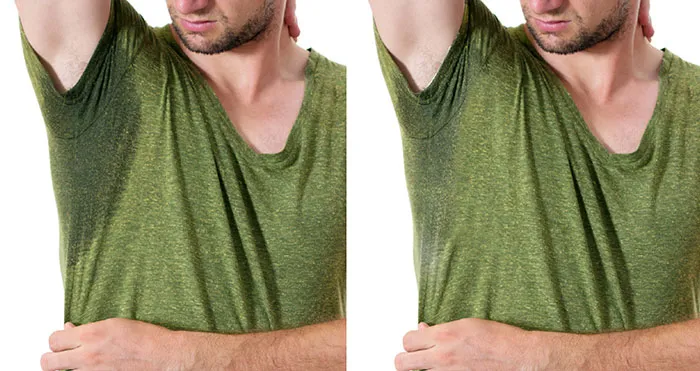
- Treatment
- Tiny needles to areas of sweating. Lasts 9 months to a year
- Recovery Time
- 10 minutes.
- Longevity
- 6-10 months
Welcome to Beautiphi, where we understand the challenges of excessive sweating and customize solutions that work for you. Excessive sweating, also known as hyperhidrosis, can be a source of discomfort and self-consciousness. At Beautiphi, we specialize in providing a range of personalized services to help you regain confidence and feel your best.
Our team of experienced professionals is dedicated to creating a comfortable and welcoming environment as we address the root causes of excessive sweating. Say goodbye to worry and hello to a renewed sense of confidence with our effective and personalized solutions at Beautiphi.
Excessive Sweating- Symptoms & Treatment
Excessive sweating or hyperhidrosis is caused by stimulation of the sweat glands by nerve endings which descend from higher centres in the brain. These nerves respond to emotional stresses; like intimate social situations, public speaking, physical stresses and increased body temperature that comes with exercise or hot, humid weather.
Most people with excessive sweating are bothered primarily when they are emotionally stressed, physically active, or overheated. Botox® and Dysport® can prevent excessive sweating for months by blocking the release of the neurotransmitter, i.e., acetylcholine, from the nerve endings that cause the glands to produce sweat.
What Causes Excessive Sweating?
Excessive sweating, or hyperhidrosis, develops for several reasons. Primary hyperhidrosis is largely hereditary — it runs in families and tends to affect specific areas of the body, such as the underarms, palms, or feet. In many cases, there is no identifiable medical trigger; the condition simply occurs on its own.
Secondary hyperhidrosis, by contrast, is driven by an underlying health condition. Diabetes, thyroid disorders, infections, and menopause are among the most common causes. Certain prescription medications can also trigger excessive sweating as a side effect. Pregnancy may also cause increased perspiration, which typically resolves once the pregnancy has ended.
The most effective approach is to identify and address the root cause wherever possible, combining lifestyle adjustments with appropriate treatments. If excessive sweating is affecting your daily life, a consultation with our team can help determine the best path forward.
Types of Hyperhidrosis
Hyperhidrosis is not a single, uniform condition. It exists on a spectrum from mildly inconvenient to significantly disabling, and understanding which type you have is key to finding the right treatment.
There are two primary forms of hyperhidrosis:
- Primary Hyperhidrosis — Affects specific areas of the body, most commonly the underarms, hands, or feet. It is often hereditary or develops without a clear underlying cause.
- Secondary Hyperhidrosis — Triggered by a medical condition or medication. Common
causes include diabetes, thyroid disorders, certain cancers, low blood sugar, and infections.
Regardless of which type you experience, both forms can be effectively managed. Treatments such as Botox for hyperhidrosis work well for both primary and secondary cases, and our practitioners will tailor a plan to your specific situation.
Which Areas Can Be Treated with Botox for Excessive Sweating?
Botox for hyperhidrosis works by interrupting the chemical signals that nerves send to sweat glands, significantly reducing perspiration in the targeted area. While the FDA specifically approves Botox for underarm (axillary) sweating, it is also commonly used to treat:
- Underarms (axillae) — FDA-approved; the most frequently treated area
- Palms of the hands
- Soles of the feet
- Face and scalp
Most patients notice a reduction in sweating within a few days of treatment, with results lasting 4 to 12 months, depending on the area treated and individual response. Our practitioners will discuss realistic expectations and the most suitable treatment areas during your consultation.
What Happens If Hyperhidrosis Is Left Untreated?
Hyperhidrosis is more than a physical inconvenience — left untreated, it can have a genuine impact on both daily comfort and emotional well-being. People living with the condition often experience:
- Heavy, unpredictable sweating throughout the day
- The need to frequently change clothing or shower multiple times daily
- An increased risk of fungal and bacterial skin infections
- Persistent anxiety around body odour, visible sweat marks, and social situations
- Feelings of embarrassment, self-consciousness, and reduced confidence
Over time, these challenges can affect relationships, work performance, and quality of life in ways that go far beyond the sweating itself. The good news is that effective, minimally invasive treatments are available. Addressing hyperhidrosis early — rather than simply managing around it — can make a meaningful difference to your overall wellbeing
Is Botox Treatment for Excessive Sweating FDA Approved?
Yes. Botox is an FDA-approved treatment for excessive sweating, specifically for severe primary axillary hyperhidrosis — that is, excessive underarm sweating in patients who have not achieved adequate relief from topical antiperspirants.
When used to treat sweating in other areas, such as the palms, soles of the feet, or face, Botox is considered an off-label application. This means those uses have not undergone the same formal FDA approval process, but they are widely practised, well-supported by clinical evidence, and routinely performed by experienced practitioners worldwide.
Botox remains one of the most thoroughly researched and trusted treatments available for hyperhidrosis. Our team will always walk you through what the treatment involves, what to expect, and whether it is the right option for your needs before recommending anything.
⚠️ Off-label use means the treatment is used outside its formal FDA-approved indication for that specific area. It is widely practised and considered safe — please feel free to ask any questions during your consultation.
FAQs On Excessive Sweating Treatment
How is Botox®, Dysport® administered?
Botox® is injected via a very small needle into the hair-bearing skin of each underarm. Normal activity can be immediately resumed, while heavy exercise should be avoided for several hours.
When can you see effects from treatment?
Excessive sweating in underarms will be decreased by 90% within 48 hours and the full effect will be seen within one week. There may be a simultaneous disappearance of odour associated with decreased sweating, but this is not consistent.
How long do the results last?
Most patients will obtain the benefit of dryness with one treatment of Botox®/ Dysport® for six to ten months.
What are the risks and complications?
Most common complications from injection into the axillary skin include tiny bruises which fade in a few days and small persistent areas of sweating that may need a second treatment.
What is the downtime after the treatment?
As with any procedure involving needles, there is a small chance of mild bruising or mild transient redness at the area of injection. The procedure takes about 10 minutes and you may drive after it. There are no restrictions on your activity thereafter, although vigorous exercise is not advised for 24 hours after treatment.
Who shouldn't get Botox Treatment for Excessive Sweating?
While Botox is an effective treatment for excessive sweating (hyperhidrosis), it is not suitable for everyone. The following groups of people should avoid or consult their doctor before undergoing Botox treatment:
- Pregnant or breastfeeding women — Botox is not recommended during pregnancy or breastfeeding, as its effects on the baby are not fully established
- People with neuromuscular disorders — Conditions such as Myasthenia Gravis or Lambert-Eaton syndrome can increase the risk of serious side effects from Botox
- People with allergies to botulinum toxin — Those who have previously had an allergic reaction to any botulinum toxin product should avoid treatment
- People on certain medications — Blood thinners or aminoglycoside antibiotics can interact with Botox and should be disclosed to your doctor before treatment
- People with active skin infections — Botox should not be injected into areas with active infection or inflammation
If your excessive sweating fails to improve with prescription antiperspirants and none of the above conditions apply to you, Botox may be a suitable option. Always consult with a qualified medical or aesthetic professional before undergoing treatment.
What happens when you stop Hyperhidrosis Botox Treatment?
When you stop Botox treatments, your sweating will gradually return to the level it was at before treatment began — it will not be worse than it was originally. The effects of each session typically last between 4 and 12 months, sometimes longer, depending on the area treated and how your body responds.
Underarm treatments tend to last toward the longer end of this range, while the palms and feet may wear off more quickly. If you are considering stopping treatment, we recommend speaking with your practitioner first so they can advise you on the smoothest way to do so.
What should I do to maximise the results of Botox Treatment for Excessive Sweating?
Following a few simple aftercare steps will help you get the best possible results from your treatment:
- Avoid hot showers, baths, saunas, or steam rooms for at least 24 hours after treatment.
- Skip strenuous exercise for the first 24 hours to allow the product to settle without disruption.
- Avoid alcohol, caffeine, and smoking for 1 to 2 days following your appointment.
- Steer clear of spicy foods for the first few days and maintain a balanced diet.
These steps are easy to follow and make a real difference to how long your results last. Your practitioner will also go through aftercare with you on the day of your appointment.
Dysport® Mandatories -
Dysport® is a prescription medicine containing Clostridium Botulinum Type A toxin complex for injection. It is used for the treatment of frown lines and excessive sweating. It should be administered only by trained medical professionals. Cautions: people with defective neuro-muscular transmission disorders, infection at site of injection, pregnancy and lactation. Possible side effects include headaches, pain, burning or redness at injection site, local muscle weakness including drooping eye lids, lack of feeling or nausea or compensatory sweating in other skin areas. Talk to your specialist about the benefits/risks of this procedure. A charge applies. Dysport® treatment lasts about four months and after this time further courses of treatment may be necessary. Speak to your specialist about your own situation.
Product information
Botox® small print+
BOTOX is a prescription medicine containing 100 units of Clostridium Botulinum Type A toxin complex for injection. It is used for the treatment of severe frown lines and associated ‘crow’s feet’ around the eyes. It should be administered only by trained medical professionals. Talk to your specialists about the benefits/risks of this procedure in appearance medicine. Cautions: people with neuro-muscular transmission disorders, presence of infection at site of injection, pregnancy and lactation. Possible side effects include headaches, pain, burning sensation or redness at injection site, temporary local muscle weakness including eyelid droop, decreased sensation and nausea. If you have side effects or concerns, talk to your doctor. A charge applies. Allergan Pharmaceutical, Auckland.
Xeomin® small print+
Xeomin® is a Prescription Medicine containing 50, 100 LD50 Units of clostridium botulinum Type A toxin complex for injection. It is used for the treatment of frown lines on the forehead in adults. It should be administered only by trained medical professionals. Talk to your specialist about the benefits/risks of this procedure in appearance medicine. Xeomin treatment lasts about four months and further courses of treatment may be necessary. Cautions: Generalised disorders of muscle activity; Infection or inflammation at the proposed injection sites, pregnancy and lactation. Possible side effects: headache, pain, swelling or infection at injection site, local muscle weakness including drooping eye lids, lack of feeling & nausea. You will need to pay for this medicine. Discuss with your specialist if Xeomin is right for you. For more information or for a copy of CMI please contact the NZ distributor: NZMS Ltd: 2a Fisher Crescent, Mt Wellington, Auckland, Ph 09 259 4062.TAPS NA7621.
If you are interested in learning more about Dysport®/Botox®/Xeomin® use for any of these treatments, please contact Beautiphi on 022 3837 968 to schedule a consultation with one of our Cosmetic Medicine Nurses.
Book your Excessive Sweating consultation
Book online in a couple of minutes, or call the clinic and our team will help you choose the right treatment.